
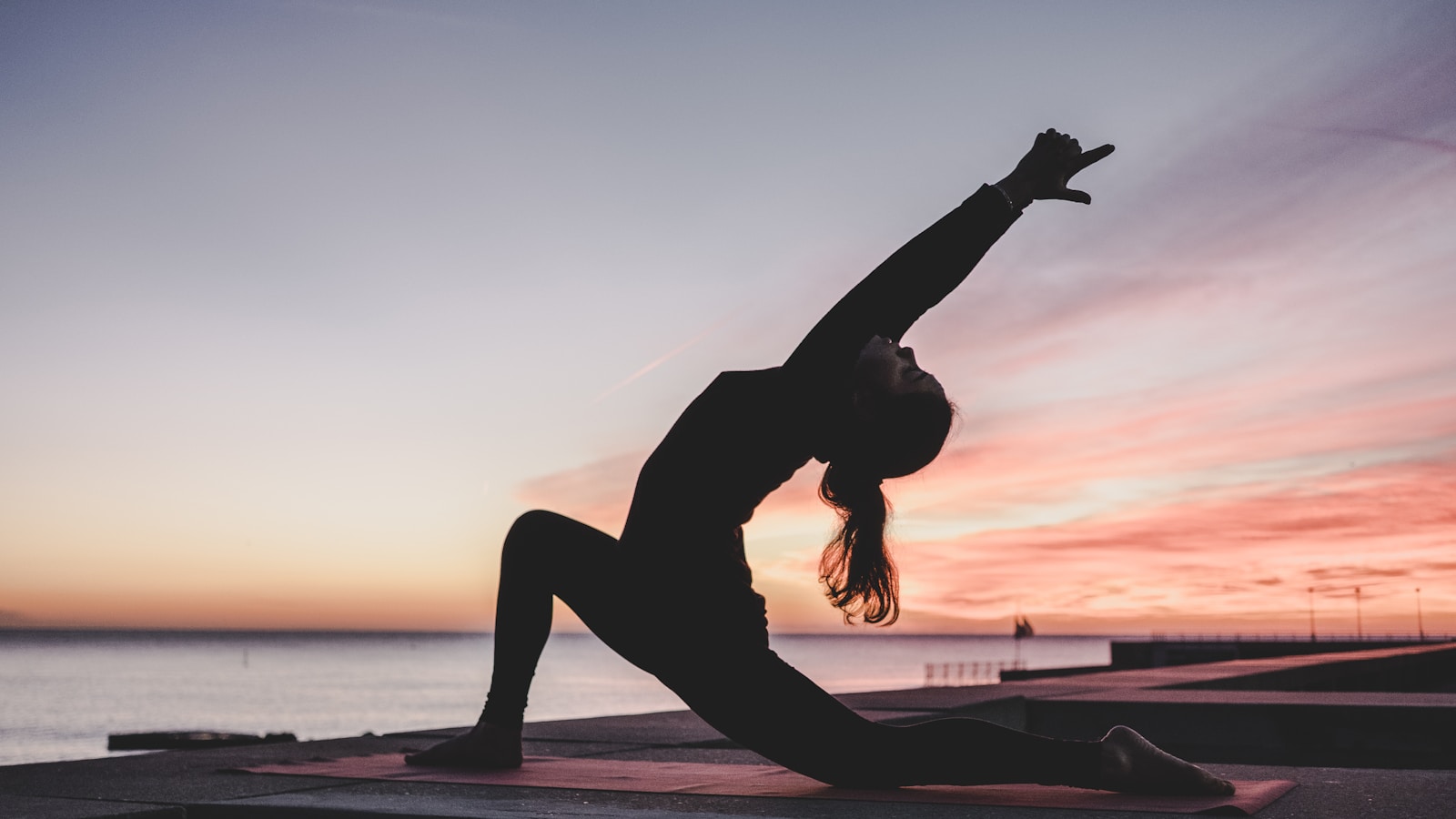
If you have ever wanted to start yoga but felt intimidated by Instagram contortionists, this is the practical entry point. The 10 yoga poses for beginners below build mobility, core strength and calm without requiring flexibility you do not yet have. Each pose includes step-by-step cues, the breath pattern and easy modifications.
Before you start
- Wear comfortable, stretchy clothes you can move in.
- A yoga mat helps but a folded blanket on the floor is fine.
- Practice with bare feet for grip.
- Move slowly. Form beats range every time.
- Breathe through the nose: long inhale, long exhale.
- If something pinches or hurts, back off. Yoga should never feel sharp.
1. Mountain Pose (Tadasana)
The simplest and most underrated pose. It teaches alignment that supports every other pose.
- Stand with feet hip-width apart, toes facing forward.
- Press evenly into the four corners of each foot.
- Let your arms hang naturally, palms facing forward.
- Lift the crown of your head toward the ceiling.
- Soften the shoulders down and back. Engage the lower belly gently.
Hold: 5 to 10 slow breaths.
Why it matters: grounding, posture, focus.
2. Forward Fold (Uttanasana)
- Stand in Mountain Pose.
- Inhale, lift the arms overhead.
- Exhale, hinge at the hips and fold forward, knees soft.
- Let your head hang heavy, hands toward the floor or grabbing opposite elbows.
- Sway gently side to side to release the spine.
Modification: bend the knees as much as needed. Forward fold is about lengthening the spine, not touching the toes.
Hold: 5 to 8 breaths.
3. Cat-Cow (Marjariasana / Bitilasana)
The single best mobility exercise for the spine. Do it daily.
- Come to hands and knees, wrists under shoulders, knees under hips.
- Inhale: drop the belly, lift the chest and tailbone (cow).
- Exhale: round the spine, tuck the tailbone, drop the chin (cat).
- Move slowly with the breath.
Hold: 8 to 10 cycles.
4. Downward-Facing Dog (Adho Mukha Svanasana)
- From hands and knees, tuck your toes and lift the hips up and back.
- Aim to make an upside-down V.
- Hands shoulder-width apart, fingers spread wide.
- Press the floor away with your palms. Soften the shoulders.
- Bend the knees as much as you need. Heels do not have to touch the floor.
Modification: bend the knees deeply or pause in tabletop with hips lifted.
Hold: 5 to 8 breaths.
Why it matters: stretches the entire back chain — calves, hamstrings, spine, shoulders.
5. Low Lunge (Anjaneyasana)
- From Downward Dog, step the right foot between your hands.
- Lower the left knee to the floor.
- Sink the hips forward and down, feeling the front of the back leg open.
- Optional: lift the arms overhead, palms facing.
Hold: 5 breaths each side.
Why it matters: opens hip flexors stiffened by sitting all day.
6. Warrior II (Virabhadrasana II)
- Stand with feet wide apart, about 1 to 1.2 m.
- Turn the right foot 90° out, the left foot slightly in.
- Bend the right knee directly over the right ankle.
- Stretch the arms out parallel to the floor, gaze over the right hand.
- Keep the back leg strong and the front knee tracking over the second toe.
Hold: 5 breaths each side.
Why it matters: full-body strength, focus, hip opening.
7. Bridge Pose (Setu Bandhasana)
- Lie on your back, knees bent, feet flat on the floor hip-width apart, heels close to the sit bones.
- Press into the feet and lift the hips toward the ceiling.
- Roll the shoulders under and clasp the hands beneath you.
- Keep the chin slightly tucked to lengthen the back of the neck.
Hold: 5 to 8 breaths.
Why it matters: opens the chest, strengthens glutes, counters slumped posture.
8. Seated Forward Fold (Paschimottanasana)
- Sit with legs extended in front of you.
- Sit on a folded blanket if your hips are tight.
- Inhale, lengthen the spine.
- Exhale, hinge from the hips and fold forward over your legs.
- Hold ankles, shins or a strap looped around the feet.
Modification: bend the knees as much as needed. Lead with the chest, not the head.
Hold: 8 to 12 breaths.
9. Child's Pose (Balasana)
The reset button. Use it any time a pose becomes too much.
- Kneel on the mat with big toes touching, knees apart wide enough for your torso.
- Sit back on your heels (or as close as comfortable).
- Walk the hands forward, forehead toward the floor.
- Relax the jaw, shoulders, hips.
Hold: as long as you like, 5 to 20 breaths.
10. Corpse Pose (Savasana)
Yes, lying still is a yoga pose — and the most important one. It is where the body integrates the practice.
- Lie flat on your back, legs extended, arms slightly away from the body, palms up.
- Close your eyes.
- Allow the body to sink into the floor.
- Watch the breath without controlling it.
Hold: 3 to 10 minutes. Set a soft timer.
10-minute morning sequence
- Cat-Cow — 8 cycles
- Downward Dog — 5 breaths
- Low Lunge right — 5 breaths
- Downward Dog — 3 breaths
- Low Lunge left — 5 breaths
- Forward Fold — 5 breaths
- Mountain Pose — 5 breaths
- Warrior II right — 5 breaths
- Warrior II left — 5 breaths
- Bridge Pose — 5 breaths
- Seated Forward Fold — 8 breaths
- Child's Pose — 1 minute
- Corpse Pose — 3 minutes
How often should beginners practice?
Three 10 to 20-minute sessions per week build noticeable mobility and calm in 4 to 6 weeks. Daily short practice beats weekly long practice for habit-building. Skip a day, never two.
What to skip as a beginner
- Headstand and handstand for the first 3 to 6 months.
- Hot yoga at very high heat (over 38°C) for the first month.
- Any pose that produces sharp pain. Discomfort yes, pain no.
- Comparing yourself to social media yogis. They have been at it for 10 years.
Common mistakes
- Holding the breath. If you cannot breathe slowly, you are pushing too hard.
- Locking the knees in standing poses.
- Letting the front knee collapse inward in lunges and warriors.
- Skipping the warm-up because "it is just yoga".
- Skipping savasana because "it is just lying down".
The bottom line
Yoga poses for beginners are not about flexibility or aesthetics. They are a daily reset for the body and mind. Run the 10-minute morning sequence three times a week for one month and you will sleep better, sit straighter and move more freely. The hardest pose is showing up — once you do, the rest is just breathing.