
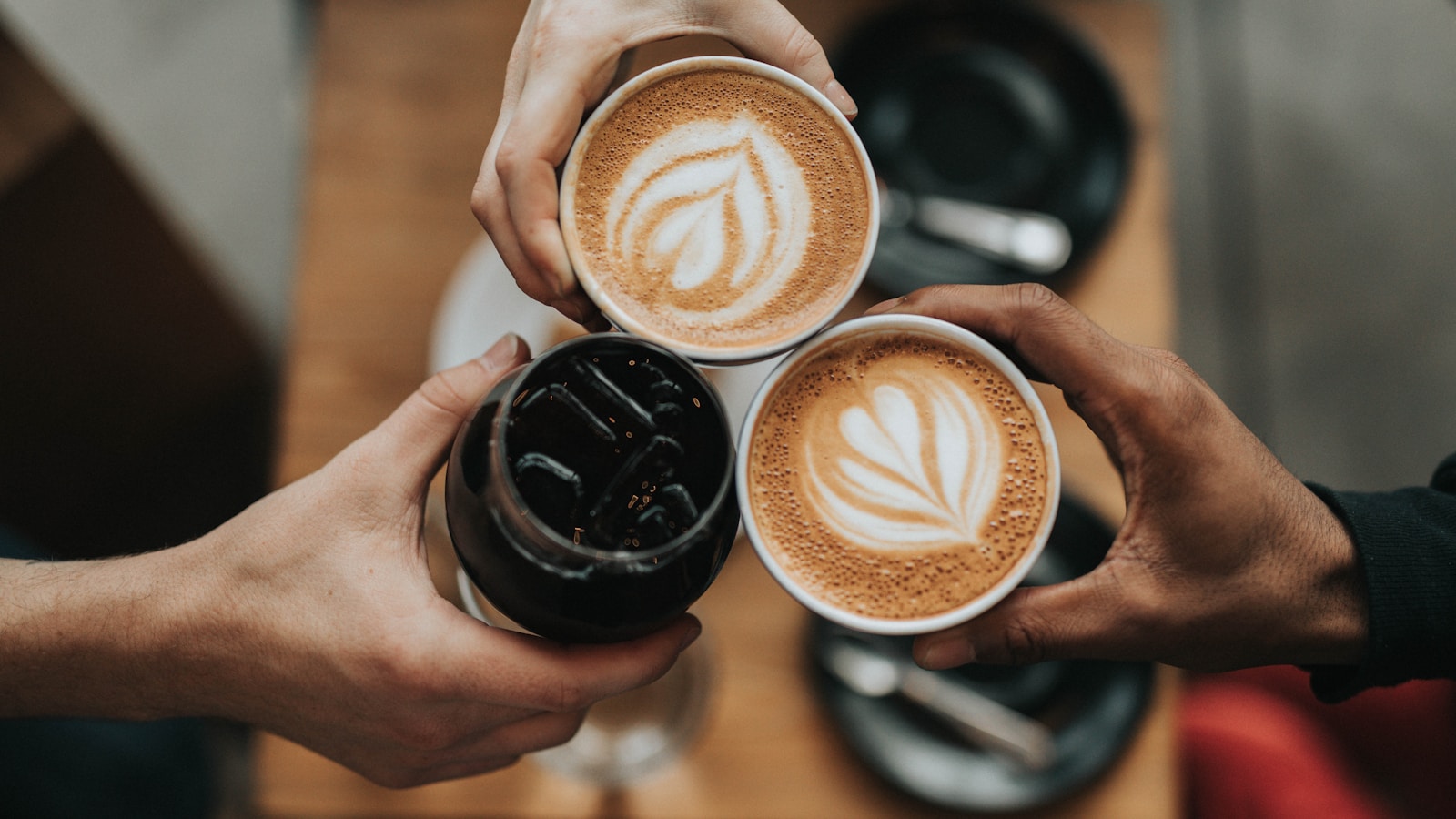
The world's best coffee cities are not always the ones with the most cafés per capita. They are the cities where ordinary daily coffee is genuinely good, where the third-wave scene has matured rather than just hyped, and where the locals — not the tourists — are the ones who keep the standards up. Some 2010s legends have coasted; some underrated cities have quietly overtaken them. Here is the list, hand-caffeinated.
The eight cities worth the flight (or the train)
1. Melbourne, Australia
Still the strongest end-to-end coffee culture in the world, even in 2026. The bar is so high that "average café" in Melbourne would be "best café" almost anywhere else. Order a flat white. The lane-way scene around the CBD, plus Fitzroy and Brunswick, makes this a city where you genuinely cannot have a bad coffee without trying. Standout: anything from Patricia, Market Lane, Seven Seeds, Proud Mary.
2. Tokyo, Japan
The unlikely-on-paper coffee capital that has earned its place. Tokyo's specialty scene — particularly in Shibuya, Shimokitazawa, Kuramae, and Sangenjaya — pairs Japanese precision with deeply considered roasting. Pour-over is the religion here. Expect single-origin beans treated like wine. Don't miss Glitch, Onibus, Switch.
3. Lisbon, Portugal
Two scenes coexist beautifully — the legacy "café com leite" working-class culture (€0.70 espressos in tile-walled neighbourhood spots) and a serious specialty wave (Hello, Kitsuné!, Copenhagen Coffee Lab, Comoba). The combination is unmatched in southern Europe. Have a bica at a tasca in the morning and a flat white at a third-wave place in the afternoon.
4. Copenhagen, Denmark
The Nordic light-roast philosophy reaches its peak here. Coffee Collective, La Cabra, Prolog — these are roasters whose beans are flown around the world. The aesthetics-and-quality combination is hard to beat; the prices are also hard to swallow. €5.50 for a pour-over is the going rate.
5. Mexico City, Mexico
The most exciting newer scene. Ground zero is Roma Norte and Condesa, with deep coffee programmes leveraging Mexico's own producers (Chiapas, Veracruz, Oaxaca). Buna 42, Quentin, Almanegra are essential. The price-to-quality ratio is absurd — €2 buys you a coffee that would be €5 in Berlin.
6. Berlin, Germany
The longest-running European specialty scene. The Bonanza-Five Elephant-The Barn axis has shaped roasters far beyond Germany. Berlin's strength is depth — there are dozens of serious cafés rather than a few hyped ones. Mitte, Kreuzberg, and Neukölln each have their own character.
7. Vienna, Austria
An older school that has quietly modernised. The traditional Viennese coffee house culture is still very much alive — long sittings, newspapers, melange — but younger cafés (Jonas Reindl, Kaffemik, Süssmund) bring third-wave standards. The best of both eras at lower prices than most Western capitals.
8. Seoul, South Korea
The unofficial new contender. Seoul's café density rivals Tokyo, and the visual creativity (the "café aesthetic" Instagram aesthetic essentially originated here) hides genuinely good coffee programmes. Look beyond the "themed" cafés to Fritz, Manuoffee, Center Coffee, Coffee Libre.
Cities with reputations bigger than current reality
- San Francisco / Portland. Originated the third wave; have lost some of the energy as costs and turnover hit. Still good; not the leaders anymore.
- Wellington, NZ. A peer to Melbourne but dramatically smaller; underrated rather than overrated, but easy to overhype.
- London. Genuinely strong scene (Workshop, Prufrock, Monmouth) but expensive and uneven; no longer punches above its weight the way it did in 2015.
Cities improving fast
- Athens. A genuinely young specialty scene, much better than its reputation.
- Tbilisi. Surprisingly strong third-wave coffee; cheap; underrated.
- Buenos Aires. The serious specialty roasters (Lattente, Felix Felicis) have quietly built a real culture.
How to drink well in any city
- Skip the chain cafés in your destination's city center. Go one or two metro stops out for the locals' picks.
- Order a milk-and-espresso drink at a new café before judging — flat whites and cortados expose roasting and milk-steaming quality faster than black coffee.
- Look at the menu: lots of single-origin beans listed by farm, region, and process is a good signal. "Espresso, Americano, Latte, Caramel Macchiato" is a less-good signal.
- The best place to find non-tourist cafés is Instagram (geotags) and the European coffee guide directories. Skip the airline magazine recommendations.
Bottom line
The best coffee cities in 2026 are Melbourne and Tokyo at the top, Lisbon and Mexico City as the value picks, and Seoul and Berlin as deeply solid mid-tier. Skip the obvious tourist coffee shops; chase the neighbourhood ones. Coffee culture, like food culture, is largely a function of how seriously the locals take their daily ritual — and these cities take it very seriously.