
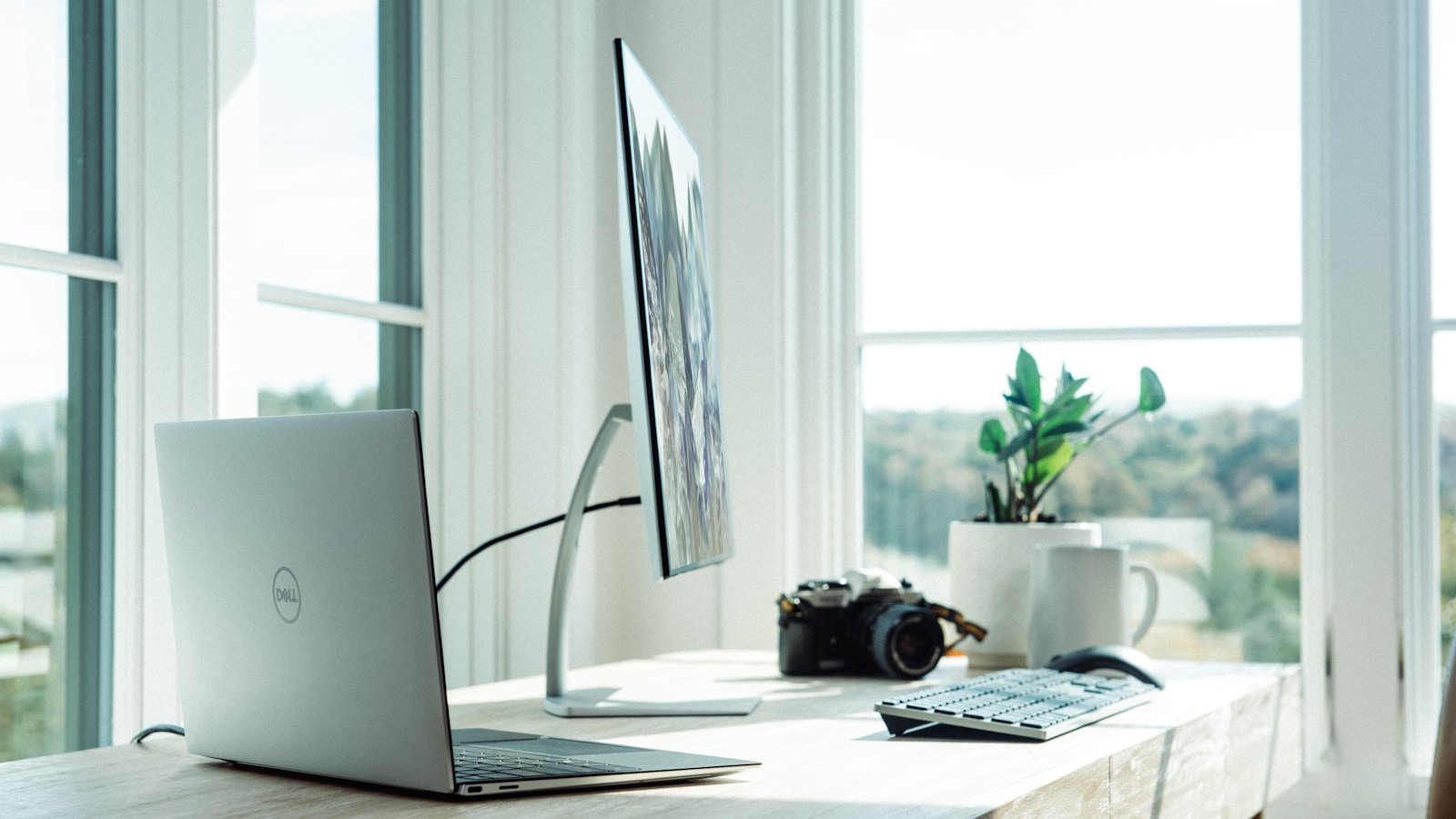
If you sit at a desk most of the day and your neck, shoulders or lower back complains by 4 PM, the issue is rarely "you have a bad back". It is your setup. This guide shows how to improve your posture at a desk with small adjustments to monitor, chair, keyboard and break habits — plus 5 stretches that fix the worst of seated work.
Why posture goes wrong
The body adapts to whatever position you spend hours in. Sitting hunched, arms forward, head poking toward the screen tightens the chest and front of the hips, lengthens the upper back, and weakens the deep core. Eight hours of that, five days a week, and pain is the predictable result.
The desk setup that costs almost nothing
1. Monitor at eye level
The top of the screen should sit at or just below the level of your eyes when looking straight ahead. Not lower, not higher. Stack books, buy a €30 monitor stand, or use a monitor arm. This single change fixes most "tech neck".
2. Screen 50–70 cm from your face
About one arm's length. Closer makes you lean forward; further makes you squint. Adjust font size if needed (it is not a sign of weakness).
3. Chair at the right height
Feet flat on the floor (or a footrest), thighs parallel to the floor, hips slightly higher than knees, lower back supported by lumbar curve. If your chair has no lumbar support, a rolled towel works.
4. Keyboard and mouse close
Elbows at ~90 degrees, wrists straight, keyboard centered on your body — not pushed away. The mouse sits at the same height as the keyboard, on the same side as your dominant hand.
5. Light from the side, not behind the screen
Backlit screens force your pupils to fight glare and your neck to find a non-glare angle. Window light from the side, plus a small desk lamp that does not reflect on the screen.
6. Sit-stand instead of static
You do not need an electric desk. Stand for 10–15 minutes every hour using a riser, a kitchen counter or even a windowsill. Movement matters more than the specific posture.
The break protocol
- Every 25 minutes: look at something 6+ metres away for 20 seconds (eyes thank you).
- Every 60 minutes: stand up, walk for 2 minutes, drink water.
- Every 2 hours: do one of the stretches below.
An app or a simple repeating timer beats willpower.
5 stretches that fix 80% of desk pain
1. Doorway pec stretch
Stand in a doorway. Forearms on the door frame, elbows at shoulder height. Step one foot forward. Lean gently. Feel the stretch across the chest. Hold 30 seconds, switch foot, repeat. Counters tight pecs from typing.
2. Cat-cow on hands and knees
Wrists under shoulders, knees under hips. Inhale, drop the belly and lift the chest (cow). Exhale, round the spine and tuck the tailbone (cat). 8–10 cycles. Mobilises the entire spine in 90 seconds.
3. Hip flexor lunge
Right knee on the floor, left foot forward, knee at 90 degrees. Tuck the tailbone, squeeze the right glute, gently push the hips forward. Hold 45 seconds, switch sides. Counters tight hip flexors from sitting.
4. Thoracic extension on a chair
Sit on a sturdy chair. Place hands behind your head. Lean back over the top of the backrest until you feel a stretch in the upper back. Look at the ceiling. Hold 20–30 seconds. Counters the rounded upper back.
5. Wall slides
Stand with back, head and arms against a wall. Make a "W" with the arms (elbows bent, hands at ear height, knuckles touching the wall). Slowly slide them up to a "Y" while keeping all contact points pressed to the wall. 8–10 reps. Counters rounded shoulders and weak mid-traps.
Strengthening — the part that actually keeps the changes
Stretching alone fades. Add 2 short strength sessions a week, focused on:
- Mid-back rows. Bands, dumbbells or bodyweight inverted rows.
- Glutes. Glute bridges, hip thrusts, deadlifts.
- Deep core. Planks, dead bugs, bird dogs (not crunches).
20 minutes twice a week is enough to see a real change in 8 weeks.
The eyes
Digital eye strain is part of the desk-pain picture. Helpful habits:
- 20-20-20 rule: every 20 minutes, look at something 20 feet (6 m) away for 20 seconds.
- Blue-light blockers help mostly in the evening; the bigger issue is reduced blink rate.
- Annual eye exams. Lots of "back pain" is unaddressed astigmatism causing forward head posture.
The mindset shift
Posture is not a perfect static position. It is the next position. Bodies were built to move. The best posture is the one you change every 30 minutes. Stand for 10, sit for 25, walk to refill water, change again. Variability beats perfection.
Equipment worth buying
- Adjustable chair with lumbar support and seat depth (€200–€500).
- Monitor arm (€40–€120).
- External keyboard + mouse if you use a laptop. Laptop = either keyboard at right height or screen at right height, never both.
- Sit-stand riser (€80–€200) if a full desk is out of budget.
- Footrest for shorter folks (€20).
What to skip
- "Posture corrector" braces. They make your back lazy.
- Kneeling chairs. Look interesting, don't fix anything for most people.
- Standing all day. As bad as sitting all day. Variability wins.
- Expensive gaming chairs marketed for office use. Big bucket seats often hurt the upper back.
Your 7-day plan
- Day 1: raise the monitor to eye level.
- Day 2: adjust chair height and lumbar support.
- Day 3: set a 60-minute break timer.
- Day 4: do all 5 stretches once.
- Day 5: add a 10-minute standing block at lunchtime.
- Day 6: schedule 2 weekly strength sessions.
- Day 7: review what stuck. Adjust the rest.
The bottom line
To improve your posture at a desk, fix the setup first (monitor height + chair + breaks), add 5 minutes of daily stretching, and build a tiny strength habit. Within a month, the 4 PM ache is gone. Within three, you will not even think about it. Posture isn't a project — it's a setup, repeated.