
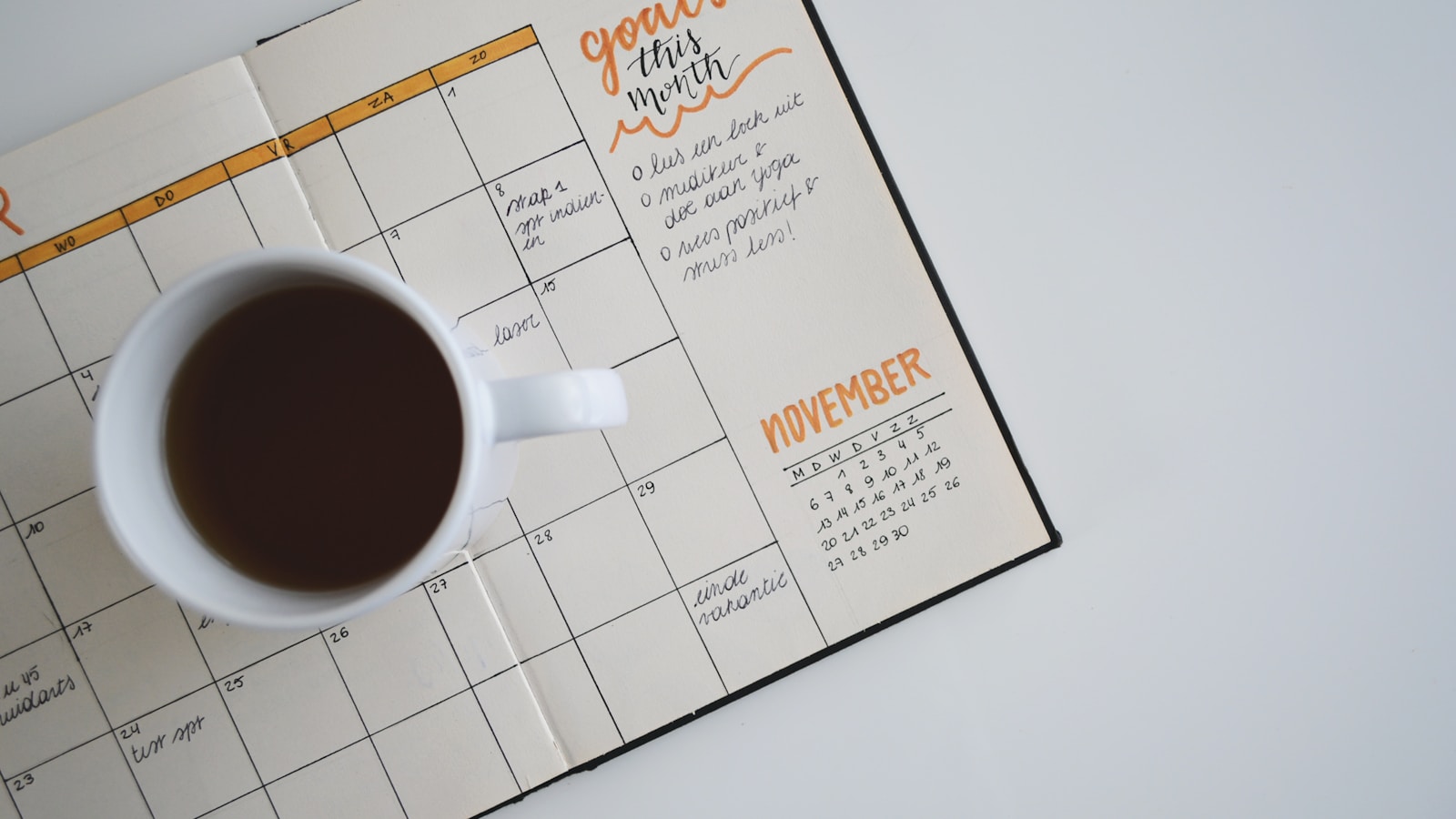
The honest version of how to master time blocking in 2026 is much less elaborate than the productivity-influencer videos suggest. Time blocking is simply scheduling specific work into specific hours. Done well, it protects your best hours for your best work; done badly, it becomes a colour-coded fantasy that collapses by Wednesday afternoon. Here is the version that survives real days.
The principle that makes time blocking work
Time blocking is not about controlling every minute. It is about deciding the few hours that genuinely matter and refusing to let them be spent on anything else. The 80/20 rule applies: a small number of protected blocks for important work do most of the heavy lifting. The rest of the day can be flexible.
The minimum viable time-blocking system
- One or two "deep work" blocks of 90 minutes each. Same time daily if possible — usually morning. Phone away. No meetings.
- One "communication" block of 60–90 minutes for email, Slack, calls. Often early afternoon.
- One "shallow work" block for admin, expenses, planning, light tasks.
- Real breaks at the boundaries — lunch, walks, transitions.
That is enough structure to produce dramatically better days without the rigidity that kills the practice within a fortnight.
What to actually block
Block these
- The deep work session for your most important task.
- Recurring rituals — Monday planning, Friday review.
- Specific recurring tasks (weekly report, payroll, content creation).
- Genuine breaks (lunch, end-of-day walk).
- Personal time (gym, family events, doctor's appointments).
Don't block these
- Reactive work that emerges through the day (email, ad-hoc requests). Have a slot; do not pre-allocate the slot to specific tasks.
- Every minute of the day. Over-blocking removes the flexibility you actually need.
- Things you don't actually do. Aspirational blocks ("read for 30 minutes daily") that you skip 90% of the time train you to ignore the calendar.
The shape of a real time-blocked day
One example, adjustable to your work:
- 8:00 — start, plan, three priorities for the day on paper.
- 8:30 — deep work block 1. Most important task. No interruptions.
- 10:00 — break, coffee, walk.
- 10:15 — deep work block 2 or scheduled meeting.
- 11:45 — communication block (email + Slack).
- 12:30 — lunch, real break.
- 13:30 — meetings or collaborative work.
- 15:00 — second deep work block on a different kind of task.
- 16:30 — wrap-up: tomorrow's three priorities, communication clean-up.
- 17:30 — done. Phone, walk, evening.
Most people who run something like this for a quarter become noticeably more productive without working longer hours.
The "how" — calendar tools and tactics
- Google Calendar / Apple Calendar / Cron / Notion Calendar. Any major tool works. Keep it simple.
- Use colour coding sparingly. 3–4 colours max. Twenty colours on the calendar is decoration.
- Create recurring blocks for daily and weekly rituals. Cuts planning overhead dramatically.
- Decline conflicting meeting requests. If your deep-work block conflicts with a non-urgent meeting, propose another time. Most people accept.
- Block time in 25/55-minute units when possible. Five minutes between meetings is the difference between rushed and present.
What to do when nothing goes to plan
Some days are just chaos. The discipline is not to abandon the system — it is to fall back to the next layer.
- If you lose the morning deep work block to crisis, protect the afternoon one even harder.
- If both deep blocks are gone, identify the single most important task and accept that today is shallow-work day. Tomorrow resets.
- If "today doesn't work" repeats three days in a row, the problem is not the day; it is the structure of the week. Re-examine.
One bad day is fine. One bad week is information. Don't let one bad day become "I quit time blocking."
The mistakes most people make
- Blocking too tightly. Every 30-minute slot scheduled creates fragility. Loose blocks survive interruptions; rigid ones do not.
- Not protecting deep work blocks against meetings. The block has to be defended actively. "Sure, I can move it" sets a precedent that the block is movable.
- Building elaborate colour systems. The system becomes the work; the actual output suffers.
- Following a guru's schedule that does not match your own peak hours. If you are sharp at 7 pm, do deep work at 7 pm. If you are sharp at 6 am, do it at 6 am. Templates are inspiration, not instructions.
- Not reviewing weekly. 15 minutes Friday afternoon spent looking at what worked / what did not is what evolves the system.
The role of energy management
Time blocking only works if it matches your energy. Three patterns worth noticing about yourself:
- When are you naturally most focused? (Most adults: 9–11 am or 4–6 pm.)
- When does focus collapse? (Most adults: 2–4 pm; the post-lunch dip is real.)
- What kinds of tasks fit which energy? (Creative work in peak energy; administrative work in the dip.)
Block your peak hours for the work that genuinely needs them. Use the dips for shallow work. The schedule should follow your energy, not the other way around.
Bottom line
Mastering time blocking in 2026 is one or two protected deep-work blocks daily, a communication block, real breaks, and the willingness to defend those blocks against meeting requests. Skip the elaborate colour systems and the all-day-blocked fantasy schedules. Run the minimum version for two months, adjust on Friday afternoons, and your output rises measurably while your hours stay the same. The point is not to control every minute; it is to protect the few that matter most.