
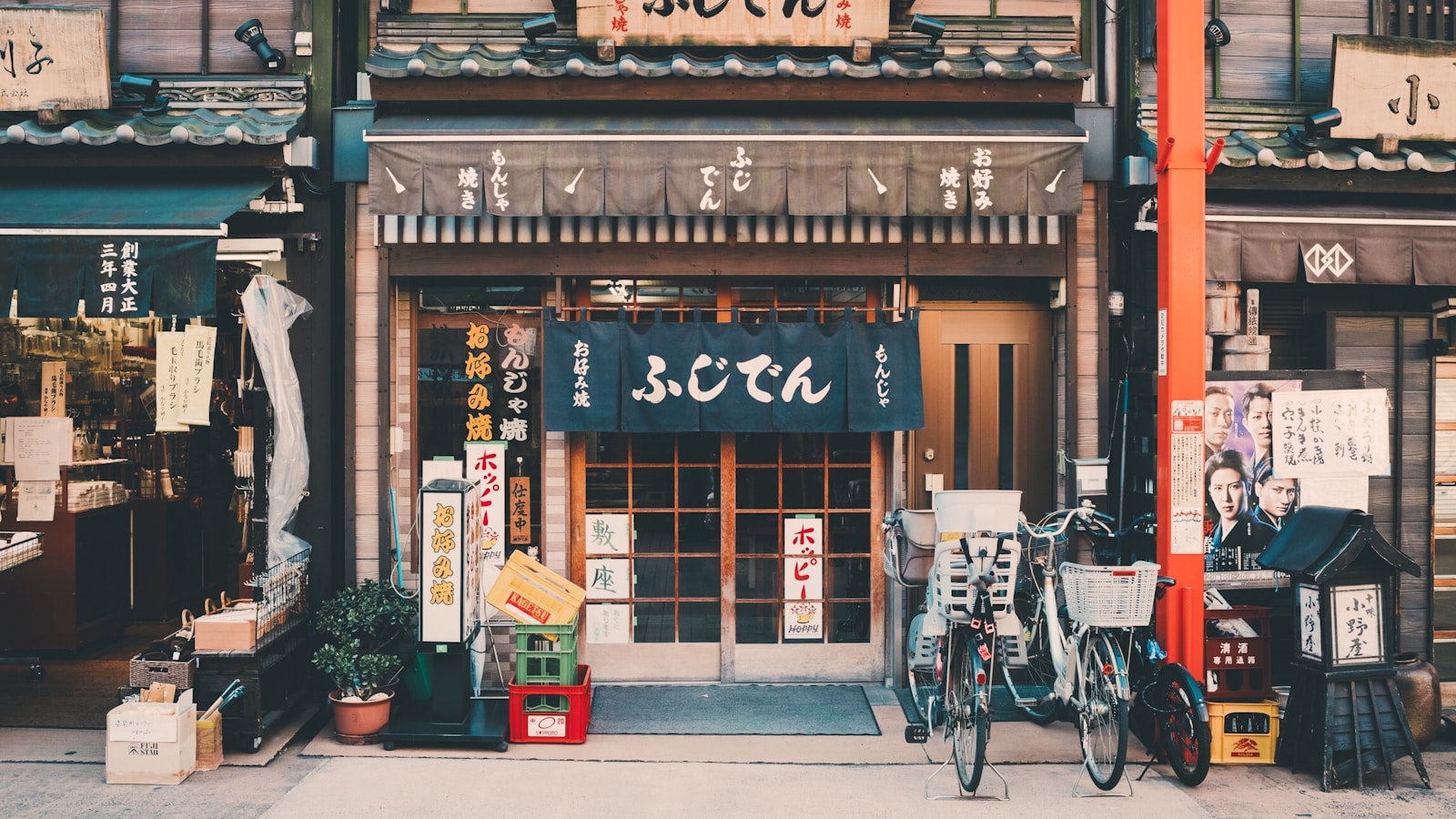
You can absolutely travel Japan on a budget in 2026 — meaning under €100 a day, all-in — without subsisting on convenience-store onigiri or sleeping in places that smell like wet shoes. The yen is at a generational low against most major currencies in 2026, and the country is one of the more honest budget destinations in the world: prices on menus are real, no tipping, no hidden taxes added at the till. With a few small choices, two weeks here costs about the same as ten days in Lisbon and considerably less than a week in London.
Where the real money goes
Three line items dominate any Japan trip budget:
- Accommodation (40–50% of total).
- Inter-city transport (15–25% of total).
- Food and drink (15–25% of total).
Get those three right and everything else — temples, parks, museums, the parts of the country that are free or near-free — falls into place.
Sleeping under €40 a night without losing your dignity
The capsule-hotel myth is overdone. They are fine for one or two nights as a novelty; not great for a full trip. Better picks in 2026:
- Business hotels. Toyoko Inn, APA, Super Hotel — €45–€70 a night for clean private rooms, free breakfast at most, central locations. The base layer of any budget Japan trip.
- Hostels with private rooms. Especially the K's House chain. Private rooms run €40–€55, dorms €25–€35, with kitchens and meeting places that solo travellers actually use.
- Ryokan with shared bathrooms in smaller towns. €60–€80 for the genuine tatami experience. Worth one or two nights of any trip, even on a budget.
- Airbnb in residential neighbourhoods. Outside the major Tokyo wards, you can find legal listings under €60. Read the fine print — Japan's short-term rental laws are stricter than other countries.
Avoid the central tourist hubs (Shinjuku, Dotonbori centre) — one stop on the metro saves 30%.
Transport: the JR Pass math is now different
The 2023 JR Pass price hike changed the calculation. In 2026, the pass is only worth it if you are crossing the country at least twice (e.g., Tokyo → Hiroshima → Tokyo, or Tokyo → Sapporo → back). For shorter trips:
- Tokyo + Kansai loop (Tokyo, Kyoto, Osaka, back): book individual shinkansen tickets — €280–€320 total. Cheaper than the pass.
- Pure budget option: the overnight bus. Willer Express runs reclining-seat buses for €30–€50 a leg. Tokyo → Kyoto in 7 hours while you sleep. Saves a hotel night.
- Local transport: Suica/Pasmo IC cards work nationwide now. Top up €30 at a time, tap on every train and bus.
One thing not to skimp on: regional rail passes (JR West, JR Kyushu, JR Hokkaido) for trips inside one region. They are usually still excellent value at €100–€180 for unlimited week-long use.
Eating extremely well for €15–€25 a day
Japan is the country where the cheap food is genuinely good. None of the budget meals below feel like compromises:
Breakfast
Either the free hotel breakfast (Toyoko Inn's is famously generous), or a konbini stop: onigiri, a small yoghurt, an iced coffee — €4 total, surprisingly satisfying. The convenience-store food in Japan is in a different universe from the Western equivalent.
Lunch
Department-store basement food halls (depachika) at lunchtime — €6–€10 for elaborate bento. Standing soba shops near train stations — €4–€7 for a real bowl in 8 minutes. Conveyor-belt sushi like Sushiro or Kura — €12–€20 for a full meal.
Dinner
Set menus (teishoku) at any small lunch counter — €8–€14 for a full balanced meal. Izakaya happy hour (5–7 pm in most cities) for €15–€20 with one drink. Ramen shops everywhere — €8–€12. The €40 dinner exists too, but you do not need it most nights.
Drink water from the tap (it is excellent), get your daily caffeine from konbini canned coffee (€1.50, surprisingly drinkable), and you save another €10 a day vs. café-hopping.
The free and almost-free things that fill your itinerary
- Most temples and shrines in Kyoto charge €3–€5 or are free.
- Public parks (Yoyogi, Ueno, Maruyama, Inokashira) are free and full of life.
- The Imperial Palace gardens are free and beautiful.
- Walking neighbourhoods is the best Japan activity, full stop. Shimokitazawa, Yanaka, Pontocho — no entrance fee.
- Small local festivals (matsuri) happen every weekend somewhere; check the city tourist board.
- Onsen / sento (public baths) — €4–€8, the best evening you can have in Japan.
The pricey traps to skip on a budget trip
- Tokyo Skytree, Tokyo Tower: €25–€35 for a view that is free from the Tokyo Metropolitan Government Building.
- Themed cafés (cat cafés, owl cafés, character cafés): €15–€25 for one drink. Once-in-a-trip novelty at best.
- Tourist-package "ninja experiences" or geisha makeover photos: €80–€150 for what amounts to a costume rental. Skip unless it is a specific bucket-list item.
- Universal Studios and Tokyo Disney: excellent parks, fully one-day-budget events on their own. Plan for them as a separate splurge, not a regular day.
Cash, cards, and the modern reality
Japan is no longer the cash-only country it was in 2018. Suica/IC cards, contactless credit cards, and major QR-code apps work in 90% of Tokyo and Osaka. But:
- Many small ramen shops, izakaya, and shrines still take cash only. Carry €100–€150 in yen at all times.
- 7-Eleven ATMs accept foreign cards 24/7 with low fees. Lawson and FamilyMart too.
- Most travel cards (Wise, Revolut) work fine. Watch for the foreign-transaction fee on your home credit card — it can be 2–3% on a 14-day trip.
A realistic 14-day itinerary at €90/day
- Days 1–4 — Tokyo. Use Toyoko Inn or hostel. €60 hotel, €25 food, €5 transit = €90/day.
- Days 5–7 — Kyoto. Hostel private room or budget ryokan. €55 / €25 / €5 = €85/day. Add €100 one-way shinkansen.
- Days 8–9 — Osaka. Hostel + cheap eats. €50 / €25 / €5 = €80/day. €15 train from Kyoto.
- Days 10–12 — A regional detour: Hiroshima + Miyajima, or Kanazawa, or Nikko. Use a regional pass (€100–€140 for the week).
- Days 13–14 — Back to Tokyo for souvenirs and last temples. €60 / €25 / €5 = €90/day.
Total all-in including transport between cities: €1,250–€1,400 for two weeks, excluding international flights. Realistic, comfortable, no skipped meals.
Bottom line
Japan on a budget in 2026 is not a hostile experience or a dignity-burning grind. It is a country where the cheap option is usually the better-loved local one, the trains run on time, the tap water is drinkable, and €100 a day buys a genuinely good day. Pick business hotels over capsules, eat where the salarymen line up at lunch, walk more than you taxi, and book the long shinkansen segments early. The country rewards travellers who do their homework and treats them surprisingly fairly when they do.