
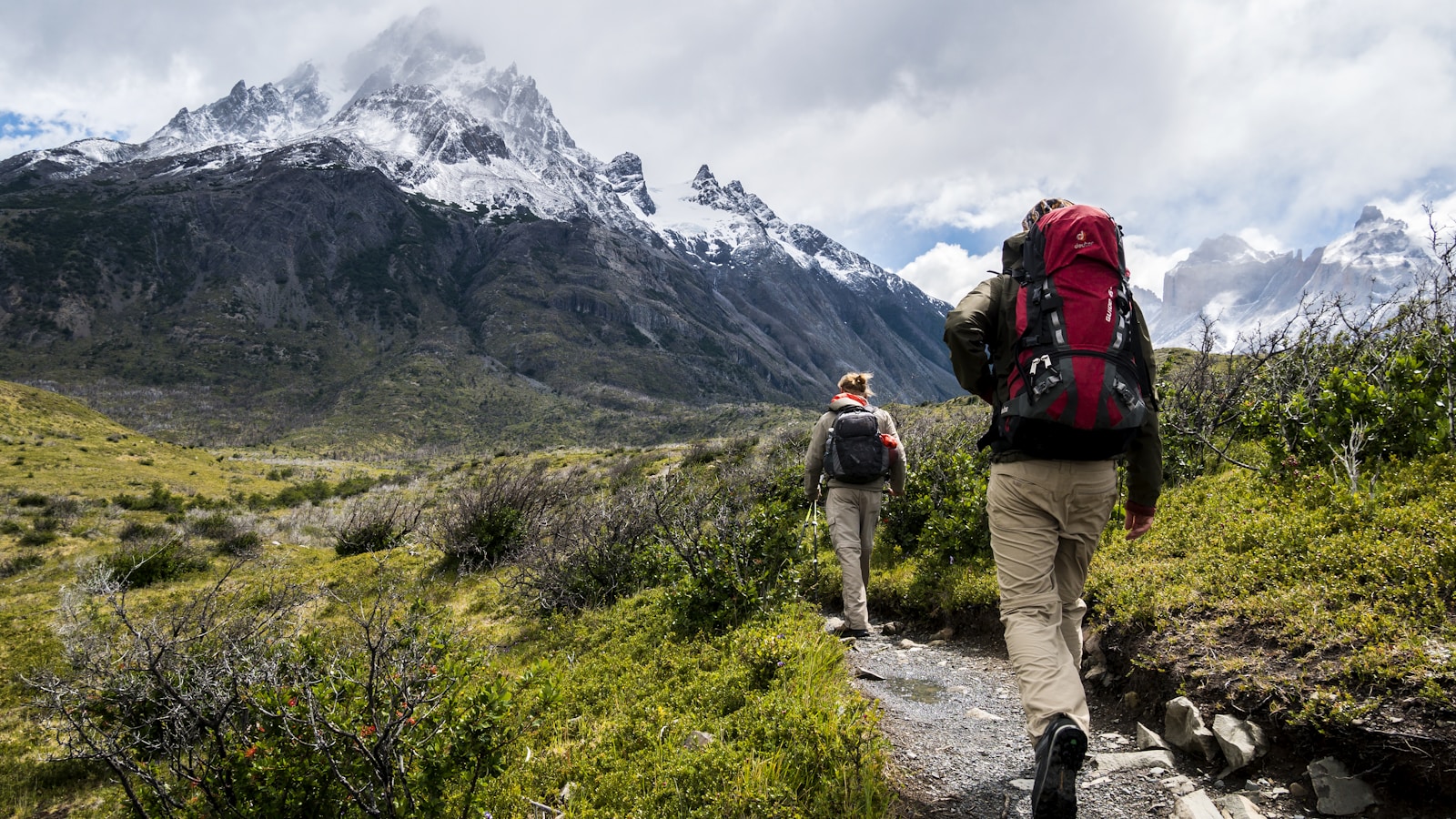
The honest version of sustainable travel in 2026 is harder and simpler than the marketing pretends. Harder because the carbon math of long-haul aviation is brutal and no clever offset truly fixes it. Simpler because three or four big choices dominate any trip's environmental footprint, and once you know them, the rest sorts itself out. Most "eco" travel content focuses on the wrong levers — the bottle, the hotel branding, the reusable bags — while the actual decisions go untouched.
The three levers that matter
1. The flight
By a wide margin, the largest single contributor. A round-trip transatlantic flight in economy creates roughly 1.5–2.5 tonnes of CO2 per passenger — comparable to a year of driving for many Europeans. Specific impact reducers:
- Fly less, stay longer. Two two-week trips a year are dramatically lower-impact than five long weekends.
- Choose direct flights. Take-off and landing are the highest-emission segments of a flight. A connecting itinerary adds 30–50% to the trip's footprint.
- Skip business class for environmental reasons too. Each business-class seat consumes 2–3× the floor space and emissions of an economy seat.
- Train where geography allows. Inside Europe and parts of Asia, the train is often genuinely competitive on time and dramatically lower-emission. Paris–London, Madrid–Barcelona, Tokyo–Osaka — train every time.
2. The destination distance
A 5-hour flight emits roughly 50% of a 10-hour flight per passenger; the linear math is real. Travelling to nearer destinations more often beats travelling to far destinations occasionally if the goal is genuinely to lower impact.
This does not mean you must abandon long-haul travel. It means: pick long-haul trips deliberately, stay long enough to make them count, and balance them with closer trips in between.
3. Length of stay
The shorter the trip, the higher the per-day impact, because the flight emissions are amortised over fewer days. A weekend trip to Bali is environmentally absurd; a month-long stay is closer to a regular vacation.
The smaller levers worth using
- Local transport. Trains, metros, buses over rental cars where they exist. Walking and biking where they work.
- Food. Local-seasonal-veg-heavy beats imported-meat-heavy on emissions and on flavour. Both at the destination and at home.
- Accommodation type. Smaller, family-run, locally-owned places usually have lower per-night impact than 500-room resorts. The branding around "eco" is mostly noise; ownership and scale tell the truth.
- Length of shower, towel changes, AC settings. Tiny per-day, but useful as habits.
Carbon offsets — the honest story
Most carbon offsets sold to consumers in 2026 do less than the marketing suggests. The forestry-based ones in particular have repeatedly been audited and found to deliver a fraction of the claimed reductions. Two principles for honest offsetting:
- Treat it as a partial mitigation, not absolution. The flight you took still happened.
- Choose direct-air-capture or verified renewable-energy projects with credible auditing (Climeworks, Frontier-aligned providers, Gold Standard projects with public data) rather than the cheapest forestry credits.
The single most effective "offset" is taking fewer flights, especially short ones. Nothing competes with not flying.
Marketing claims to ignore
- "Sustainable luxury resorts" with private infinity pools and helicopters. Almost always less sustainable than a small guesthouse, regardless of the brochure.
- "Carbon-neutral flights" as a marketing term — usually built on the same questionable offsets.
- "Eco-friendly bottled water" in places where the tap is fine.
- "Voluntourism" packages where you pay €3,000 to "help" a community. The cash transferred to the community minus the operator margin is rarely the bottleneck.
Where supporting local genuinely matters
The right "ethical" travel choices are not really about emissions — they are about where the money goes:
- Eat at family-run places, not international chains.
- Stay in independently-owned guesthouses where possible.
- Hire local guides directly rather than through global aggregators that take 50% of the fee.
- Buy crafts at the artisan's workshop, not at the resort gift shop.
- Tip generously where it is the cultural norm, even when the headline price was already paid.
This is the lever where small choices compound into real economic impact — far more than the symbolic ones.
Travel ethics worth thinking through
- Wildlife tourism. Skip the elephant rides, tiger photo ops, dolphin shows. Many "sanctuaries" are tourism operations dressed in conservation language. Genuine wildlife encounters in real habitats are the alternative.
- Overcrowded destinations. Visiting Venice, Dubrovnik, or Santorini in peak summer adds to the strain on the residents. Consider shoulder season.
- Photography of people. Ask. Always. The "candid" street photo of a local is theirs to consent to.
- Supporting authoritarian tourism economies. Personal call. Different people draw the line differently; thinking it through honestly beats not thinking about it.
The mindset shift
Sustainable travel is less about a checklist and more about a relationship with how you travel. People who travel well in 2026 tend to:
- Travel slower — fewer destinations, longer stays, deeper immersion.
- Skip "must-see" lists in favour of one or two places they really want to be.
- Use cash and small businesses in destination economies.
- Photograph less, talk more, walk more.
- Treat each trip as one of perhaps 30 in a life — not as a frantic accumulation.
Bottom line
Travelling sustainably in 2026 is mostly about the big levers: fly less and stay longer, pick direct flights, take the train where you can, eat local, support locally-owned businesses, and skip the marketing-flavoured "eco" upsells. The single bottle of water you refused does not move the needle. The thirty short-haul flights you replaced with two long stays does. Once you accept that asymmetry, the rest of the choices stop feeling like a moral burden and start feeling like a different — and usually better — way to travel.